

Proposal
Current trends in the pharmaceutical industry increasingly demand novel translational approaches for pre-clinical testing. These approaches rely heavily on animal experimentation, where analysis should extend beyond a single variable (e.g., one behavioural endpoint) toward a multidimensional framework incorporating behaviour, ultrasonic vocalisation (USV), physiological parameters, cognition, and other relevant study variables.
As a consequence, the automation of repetitive behaviour classification, ultrasonic call classification, and the integration of multiple measurement technologies have become essential. By combining methodological expertise and advanced technologies, it is possible to develop not only gold-standard animal models but also gold-standard behavioural phenotyping strategies, thereby substantially increasing the translational relevance of pre-clinical research.
Metris B.V. (The Netherlands) proposes the adoption of multi-dimensional and multi-functional parameters in behavioural studies, based on the principle that:
Behaviour = f (internal stimuli, external stimuli)
Behaviour = f (dynamic internal stimuli, e.g., drug effects), when external factors are kept constant
Accordingly:
1. A stable and controlled environment is essential for reliable behavioural analysis.
2. To enhance the quality of the study and have better statistical probability, it is important to analyse many parameters from the same behaviour (i.e. group of parameters or matrix).
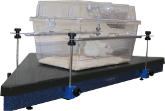
Various animal models for CNS, ASD, PTSD, and Parkinson’s disease are critically reviewed in terms of their ability to reproduce the complex developmental biology of these disorders. This evaluation is supported by examples using Metris B.V. technologies, including the LABORAS system for automated behavioral analysis, the SONOTRACK system for USV recording and analysis, Sonotrack Automatic Ultrasound Call Classification software, the SmartChamber for isolation and environmental control, and the RatPad system for cognitive studies.
In conclusion, future pre-clinical research must emphasise a multimodal approach that considers the animal as a single, integrated biological system. Experimental designs should minimise constraints on natural behaviour, enabling stress-free, continuous data acquisition under stable environmental conditions. However, meaningful technological innovation requires a clear understanding of researchers’ scientific objectives. Only by first exploring specific research needs can appropriate solutions and novel tools be developed. Strengthening collaboration between researchers and industry is therefore essential to advance translational neuroscience.
Levon Bachdasarian, Ph.D
Technical Manager
Metris B.V.
Contact number: +31652653690
Twitter account: @LBachdasarian
Linked In account: linkedin.com/in/levon-bachdasarian-974186a
Website: www.metris.nl
Recent Publications
- Bachdasarian, L.; Bulthuis, R.J.A.; Molewijk. M.; Guchkov, S.; Revyakin, A. (2013). Enhanced technologies and integration parameters of pre-clinical studies. Biomedicina, March 2013, No.1.
- de Groot, Didima; Slieker, Roderick; Woudenberg, Anna Beker van; Wolterbeek, Andre; Otto, Marlies; Bulthuis, Ronald; Bachdasarian, Levon (2015). Stress-free monitoring of development in rats using the litter [dam+pups] as measuring unit. International Journal of Reproductive Toxicology, Volume 56, pp. 29-29.
- Bachdasarian, L.; Bulthuis, R. (2008). The importance of the energy parameter in preclinical research. Toxicology journal, October 2008. No.3.
- L. Bachdasarian (2023). Exploring the Use of Animal Models and Behavioral Measurements in Neurodegenerative Disorder Research Rodent Behavior Study using (Laboras, Sonotrack and SleepSign). Stress & Behavior Journal, May 2023.
- Nam, H-s.; Capecchi, M.R. Lrig1 expression prospectively identifies stem cells in the ventricular-subventricular zone that are neurogenic throughout adult life. Neural Development, 2020 15:3, March 2020